
Why Technical Assistance Matters: The Hidden Infrastructure Behind Climate Investments

Across emerging markets, there is no shortage of climate projects with the potential to deliver environmental and social impact. From renewable energy and electric mobility to regenerative agriculture and waste management, governments and project developers are bringing forward innovative solutions to address climate challenges. Yet many projects struggle to attract investment.
A common barrier is not the availability of capital, but the lack of investment readiness. According to the World Bank’s Global Infrastructure Facility, project preparation remains one of the most significant constraints to infrastructure investment in developing countries. Without robust feasibility studies, financial modelling, environmental assessments, and stakeholder engagement, projects often fail to meet investor requirements.
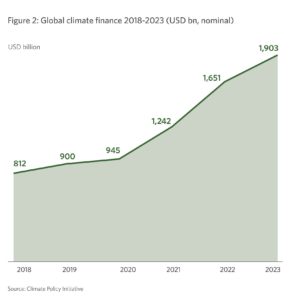
This challenge is becoming increasingly important as climate finance continues to grow. Climate Policy Initiative’s Global Landscape of Climate Finance 2025 highlights that while climate investment is increasing globally, funding levels remain far below what is needed to meet climate and development goals. Expanding the pipeline of investment-ready projects will therefore be critical. This is where technical assistance plays an important role. Technical assistance helps project developers strengthen project fundamentals, improve bankability, and address key risks before seeking financing. Activities may include technical assessments, financial modelling, legal and regulatory reviews, environmental and social due diligence, and transaction structuring.
For investors, these activities provide the information needed to assess opportunities with greater confidence. For project developers, they help transform promising concepts into investable opportunities.
The importance of this work is increasingly recognized across the blended finance community. Convergence’s State of Blended Finance 2025 notes that project preparation remains one of the most effective uses of concessional capital because it helps unlock larger volumes of private investment. Recent Convergence analysis similarly highlights the continued importance of upstream project development and transaction preparation in mobilizing capital toward sustainable development objectives.
Experience across climate infrastructure sectors shows that successful investments rarely begin with financing. They begin with preparation. Whether assessing charging infrastructure for electric mobility projects, validating business models for waste-to-value initiatives, or strengthening agricultural value chains, technical assistance helps build the evidence base required for investment decisions.
As governments and investors seek to accelerate climate action, strengthening project pipelines will become increasingly important. Technical assistance is therefore more than a support mechanism. It is a critical component of investment readiness, helping improve bankability, reduce risk, and mobilize capital toward sustainable development outcomes.
About the Subnational Climate Fund
The Subnational Climate Fund is a blended finance initiative supporting mid-sized infrastructure projects and companies in emerging markets. Through its Technical Assistance Facility and Investment Fund, SCF strengthens project fundamentals, enhances investment readiness, and mobilizes private capital for sustainable development outcomes across sectors such as sustainable energy, waste management, and regenerative agriculture.
For more information on this project and other initiatives supported by SCF, visit our Projects page and explore opportunities to collaborate or submit proposals for technical assistance or investment.
Discover our other articles