Courageous Land reaches a milestone: US$23 million in BNDES financing to scale Amazon agroforestry
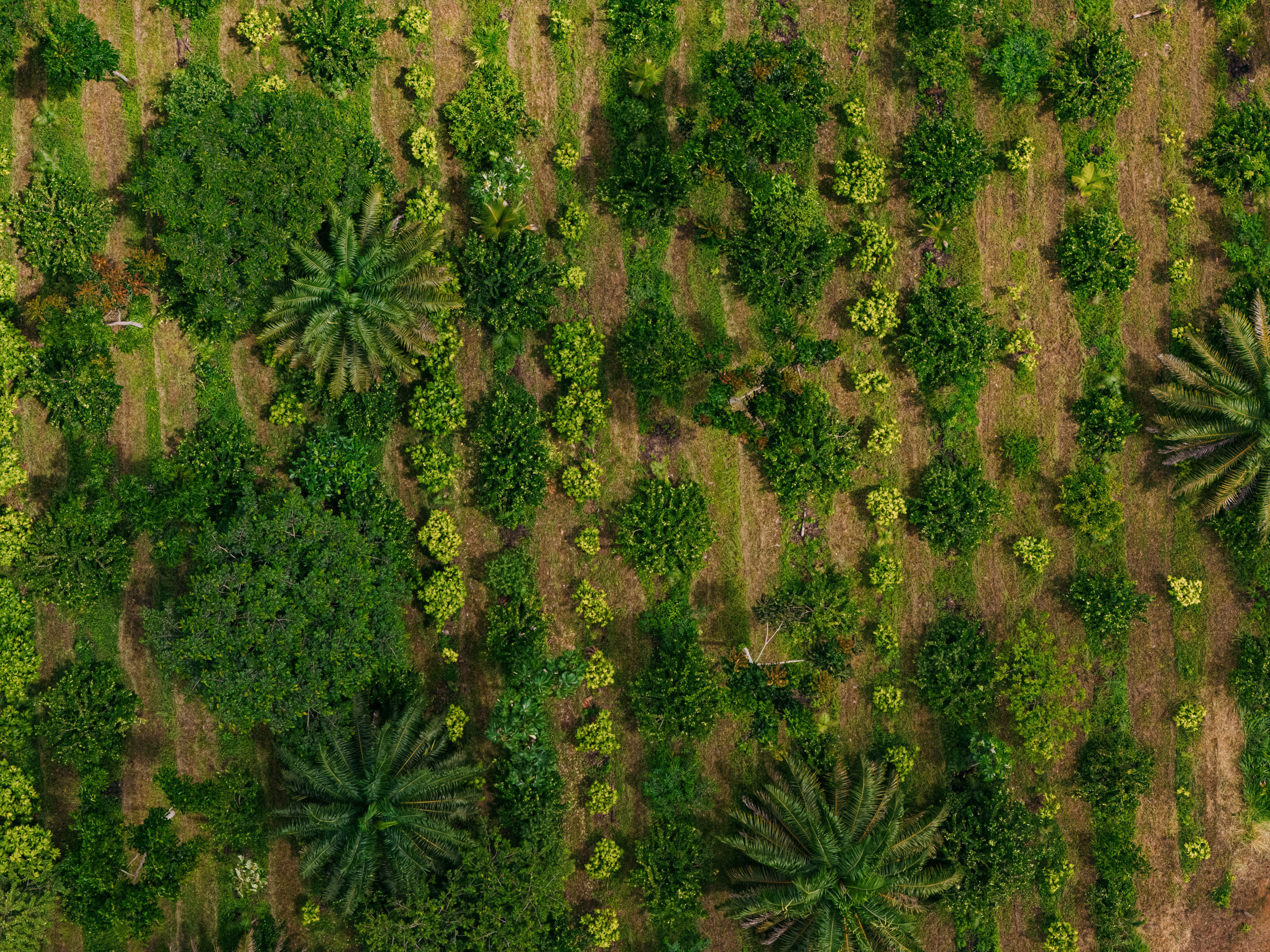
Image credits: Courageous Land
Courageous Land, a nature-based solution that received early-stage technical assistance through the Subnational Climate Fund has secured landmark development bank financing, a signal of how rigorous project preparation translates into investable, scalable restoration. The Subnational Climate Fund (SCF) is proud to share a major milestone reached by Courageous Land, a pioneering agroforestry initiative in the Brazilian Amazon and a recipient of SCF technical assistance. The project has now secured the institutional financing needed to move from demonstration to scale.
Located in the state of Roraima, in the heart of the Amazon, Courageous Land is transforming degraded pasturelands into biodiverse, productive landscapes. The initiative develops nature-positive land-use models that combine forest restoration with regenerative agriculture, generating climate mitigation, biodiversity recovery and inclusive rural development. It is part of a fast-growing pipeline of nature-based solutions across Latin America, where credible, science-based project preparation has become central to mobilising institutional capital.
A landmark milestone: US$23 million from Brazil’s National Development Bank (BDNES)
Brazil’s National Development Bank (BNDES) has approved R$116 million — approximately US$23 million — in financing for Courageous Land’s flagship agroforestry project in the Brazilian Amazon. The financing will support the establishment of up to 10,000 hectares of agroforestry systems, beginning with an initial 2,000 hectares and scaling from there, in what is set to become one of Brazil’s largest organic restoration projects.
The project will productively reforest degraded pastures with regenerative coffee, açaí, cacao and native timber species, and includes a nursery, a processing facility and the generation of premium carbon credits under the Verra standard. Announced on World Environment Day at an event at the Palácio do Planalto, the commitment is a powerful endorsement of agroforestry as a credible, investable land-use model — evidence that restoration can deliver financial, social and environmental returns in parallel.
For SCF and its partners, the significance extends beyond a single transaction. Development bank financing at this scale demonstrates how a well-prepared, de-risked project can attract the institutional capital required to move nature-based solutions from concept to commercial scale.
The role of early-stage technical assistance
SCF supported Courageous Land in the early phase of project preparation through its Technical Assistance Facility, by delivering a Pre-Feasibility Water Resource (Groundwater) Assessment Study.
Hydrological understanding is foundational for early-stage agroforestry. For land-use and restoration projects, groundwater availability, recharge dynamics and seasonal variability directly shape both ecological and financial performance. A rigorous assessment of these parameters allows a project to confirm physical feasibility and to inform decisions on:
- the viability and spatial design of agroforestry systems, including phased deployment in zones with optimal hydrological conditions;
- long-term water balance under climate-variability scenarios;
- appropriate species selection, planting density and irrigation strategy; and
- the resilience of restored ecosystems under drought stress.
Expected Impact
As it scales, Courageous Land is expected to deliver interlinked climate, biodiversity and socio-economic benefits aligned with the Sustainable Development Goals (notably SDG 13, SDG 8 and SDG 5). These include:
- Climate mitigation: an estimated 970,000 tonnes of net carbon removals over 30 years through soil regeneration and expanded tree cover, alongside premium carbon credits under the Verra standard;
- Climate resilience: improved watershed functionality, reduced soil erosion and heat-reducing microclimates across restored landscapes;
- Decent work: the creation of sustainable rural employment — with a target of 800 direct jobs by 2030 — including opportunities for Venezuelan refugees adapting to Brazil; and
- Gender equality: formal work and management opportunities for local women, in line with the SCF Gender Policy.
These outcomes reflect the growing recognition that land restoration must be both ecologically sound and financially structured to attract long-term capital at scale.
Building investable pipelines in emerging markets
Through engagements such as Courageous Land, SCF continues to demonstrate its role as a platform for project preparation in emerging markets. Over successive years and across multiple geographies and sectors, SCF has developed a structured approach to identifying and addressing the early-stage barriers that prevent high-impact, innovative initiatives from reaching investment readiness — strengthening technical foundations across hydrology, engineering, environmental and social safeguards, and financial structuring.
SCF addresses a critical segment of the climate-finance ecosystem: the “missing middle” between promising project concepts and fully structured, investable transactions. This phase is often underfunded, yet it is precisely where catalytic capital generates disproportionate impact — de-risking projects so that development finance institutions, development banks and private investors can deploy capital at scale. Courageous Land’s progression from technical assistance to a landmark BNDES commitment illustrates this pathway in practice.
About the Subnational Climate Fund
The Subnational Climate Fund is a blended-finance initiative supporting mid-sized infrastructure projects and companies in emerging markets. Through its Investment Fund and Technical Assistance Facility, SCF strengthens project fundamentals, enhances investment readiness and mobilises private capital for sustainable development outcomes across sectors including sustainable energy, waste management and regenerative agriculture. By focusing on early-stage project preparation, SCF bridges ambitious climate and nature objectives with the requirements of institutional investors, development finance institutions and philanthropic capital providers.
To explore the projects supported by SCF, or to submit a proposal for technical assistance or investment, visit the SCF Projects page.
Discover our other articles