- Sector : Renewable Energy
- Location : Morocco and Senegal
- Involvement : Technical Assistance
Overview
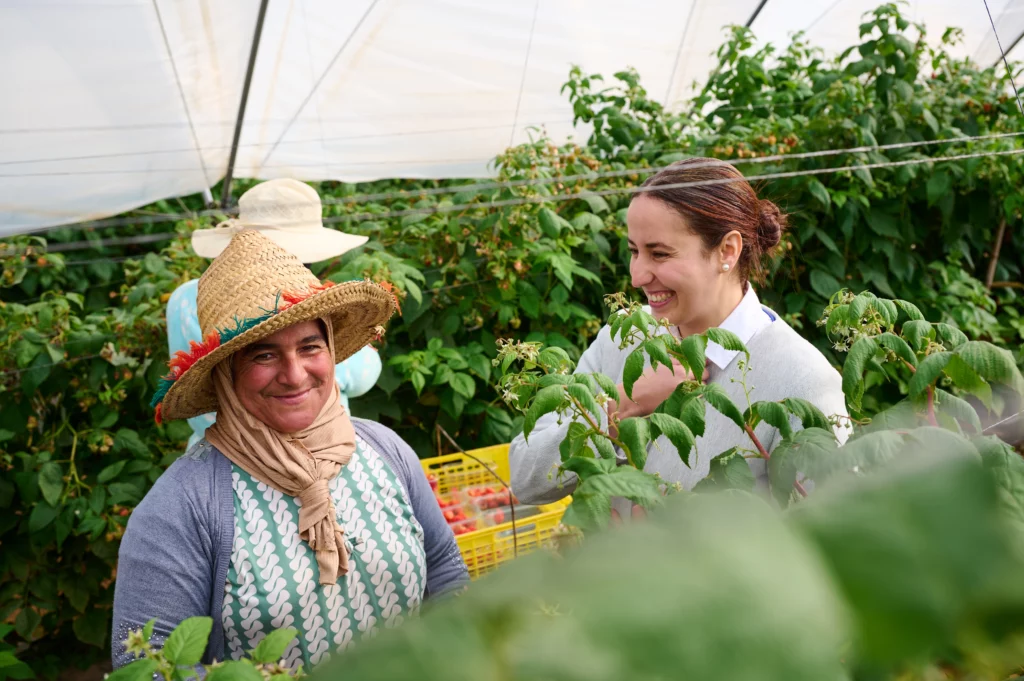
Mirriah sells solar-powered drip irrigation to smallholder farmers and lets them pay for it out of what they save. A system combines panels, a pump and precision drip lines, drawing on wells or surface water the farm already has a right to use. Farmers pay in instalments over three to twelve months from the fuel they no longer buy, with no bank loan and no credit assessment; the company keeps ownership until the system is paid off, which makes the equipment its own security.
The model is commercially established in Morocco, where the company reports 827 farms served across five regions since 2020, and now wants to enter Senegal. In September 2026 the Subnational Climate Fund (SCF) approved technical assistance funding two studies: one testing whether Senegal can actually support the expansion, and one building the monitoring system the company currently lacks.
The Challenge
Morocco’s renewable water per person fell from around 2,500 cubic metres in 1960 to under 650 by 2019, close to absolute scarcity, while agriculture takes roughly 80% of what is left and most cultivated land remains rain-fed. Senegal is earlier in the same curve: under 5% of cultivated land is irrigated and around 90% of farmers depend on rain that is becoming less reliable. Flood irrigation, still the norm, wastes a large share of the water it uses.
Farmers across Africa spend an estimated USD 2 billion a year on diesel for pumping, and fuel can absorb around 40% of a smallholder’s income. Solar and drip technology are mature and would solve both problems, but roughly 95% of the continent’s smallholders cannot access credit, so the upfront cost puts them out of reach. Nothing about the hardware is unproven. What is unproven is a delivery model that reaches farmers without a bank, keeps working when equipment breaks, and does not simply move the water problem somewhere else.
Technical Assistance
The SCF Technical Assistance Facility, led by the International Union for Conservation of Nature (IUCN) in collaboration with Catalytic Finance Foundation and Gold Standard, is funding two studies that address the two distinct reasons this model could fail.
Study 1: Senegal water and market validation
The commercial and hydrological questions are answered together, because a market that exists on paper is worth nothing if the aquifer cannot support it:
- Whether the farmer segments, irrigation practices, fuel spend and seasonal patterns match the company’s assumptions about its addressable market.
- Whether farmers would adopt the system, and how they view instalment payment tied to the harvest.
- What groundwater conditions, recharge and existing abstraction actually are in the two target regions, against rainfall records and climate projections to 2035.
- How many farms the water can sustainably support under optimistic, realistic and stressed scenarios, tested against the company’s own 3,000-farm target.
- Whether the delivery partners, suppliers and the regulatory framework for agricultural water use would allow deployment at all.
Study 2: Environmental and social monitoring system
Three months, designing a system the company can run itself. Its impact figures currently rest on internal estimates with no independent verification, and there is no mechanism for surfacing harms:
- Whether the methods behind the fuel, emissions, water and food figures hold up, with a sample of claims verified and the data-quality gaps documented.
- One harmonised indicator set that satisfies donor and investor reporting instead of several overlapping ones.
- An environmental and social screening step added to an onboarding process that is currently financial only.
- A proportionate grievance mechanism, aligned with IFC Performance Standards, for issues such as water-use disputes, over-indebtedness and labour concerns.
- Training so the company can run all of it without external support.
Efficient irrigation saves water per hectare, but the savings can encourage farmers to expand the irrigated area, so total extraction rises even as efficiency improves. The appraisal identifies this rebound effect directly; mitigations under consideration include flow restrictors, buffers around protected wetlands, and connection only to already-authorised water sources, with no new boreholes or surface abstraction. Neither study replaces the environmental and social impact assessment required before investment. Full terms of reference are available on request.
Our Target Impact
-
SDG 13 Climate Action
The company reports 12.9 million kg of CO2 avoided to date by replacing diesel and butane pumping with solar, estimated from recorded fuel spend and IPCC emission factors. The calculation excludes emissions embodied in the solar equipment.
These are company figures that have not been independently verified. Verifying them is part of what the second study is for.
-
SDG 8 Decent Work and Economic Growth
More than 200 rural young people have been trained as certified technicians who install and repair systems in their own villages, which keeps the work and the money in rural areas rather than drawing people to cities.
The company employs 20 full-time staff, targeting 58 by 2030, with the technician network scaling alongside it.
-
SDG 5 Gender Equality
Morocco and Senegal rank 113th and 127th of 172 countries on the UNDP Gender Inequality Index, reflecting persistent gaps in health, empowerment and labour-market participation.
The company reports that 60% of its full-time staff are women, including function leads, and that it works with 30 women-led cooperatives reaching more than 180 women. It states that it meets 2X Challenge criteria, which is not yet independently verified. The project will comply with the SCF Gender Policy.
There can be no guarantee that the investment will be completed on the terms described or implied above, that SCF will be able to successfully invest in such project or that impact targets will be achieved.