- Sector : Waste Management & Circular Economy
- Location : East Java, Indonesia
- Involvement : Technical Assistance
Overview
In Indonesia, an estimated 165 million people lack access to formal waste management services, resulting in millions of tons of waste leaking into the environment annually. The national government has set ambitious targets to reduce waste generation by 30% and ensure 70% of waste is properly managed by 2025, alongside a goal of reducing marine debris by 70%. Achieving these objectives will require additional support and investment.
As a global hub for manufacturing and trade, Indonesia has strong linkages with international markets, particularly in plastics and petrochemicals. However, fluctuations in the global oil market, regulatory changes, and shifting consumer preferences toward sustainability are shaping the future of plastic production and recycling. Government policies, such as the National Plastic Action Partnership (NPAP), aim to achieve a 70% reduction in plastic pollution by 2025, further driving the need for investment in waste management solutions like Project OCEAN.
Project OCEAN, an initiative co-led by Borealis and Borouge, builds on this foundation by integrating mechanical recycling (m-Rec), advanced sorting technologies, and commercial partnerships to establish Indonesia’s first fully integrated waste and recycling ecosystem. Project OCEAN aligns closely with Indonesia’s updated NDC (2025).
The Challenge
Indonesia generates approximately 6.8 million tons of plastic waste annually, yet around 165 million tons lack proper waste management. An estimated 620,000 tons enter the ocean each year, making Indonesia the second-largest contributor to marine plastic pollution globally.
This crisis stems from three critical failures:
- Climate impact from virgin plastic production: Rising petrochemical-based plastic consumption drives greenhouse gas emissions across the entire product lifecycle—from extraction and production to waste disposal—accelerating global warming and resource depletion.
- Fragmented recycling infrastructure: Indonesia’s recycling value chain lacks integration. While demand for post-consumer recycled (PCR) plastics grows among multinational brands, persistent challenges in feedstock quality, processing efficiency, and supply chain coordination between collectors, recyclers, and producers create systemic inefficiencies.
- Low recovery rates and poor output quality: Inefficient collection, low recycling rates (~10-15%), and underutilized infrastructure result in poor-quality recyclates that fail to meet market standards, leading to significant value leakage.
An integrated solution addressing collection, processing, and commercialization is needed—one that can scale across Southeast Asia’s emerging markets facing similar waste management challenges.
SCF’s Involvement – Technical Assistance
The Subnational Climate Fund, through its Technical Assistance facility managed by IUCN and executed in partnership with Catalytic Finance Foundation, is funding a comprehensive feasibility study to assess the establishment of a greenfield plastics recycling facility in East Java, Indonesia. The project will be carried out in partnership with local waste management and recycling partners in Indonesia.
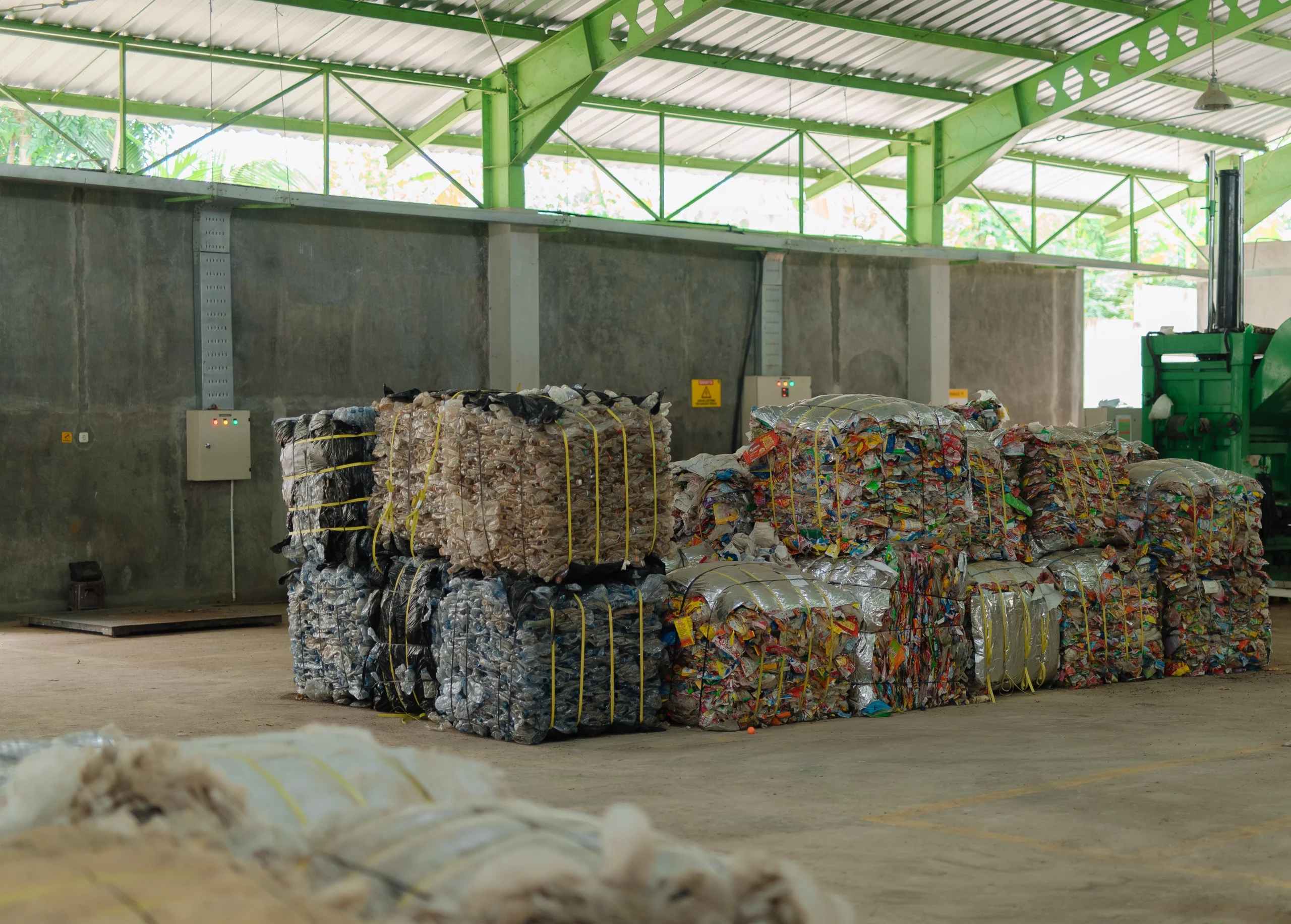
The study will focus on the integration and technical feasibility of key process components, including OSBL systems (Outside Battery Limits), to ensure an optimized and economically viable recycling operation, and aims to cover the full process chain – from the sorting of incoming mixed plastic waste feedstock to its conversion into recycled resin products – also known as recyclate.
Key areas of study include:
- Process flow and mass balance analysis by developing a Process Flow Diagram (PFD) ensuring the integration of all production components and the assessment of material characteristics across the recycling process.
- Technology and CAPEX benchmarking including the comparison of CAPEX requirements of the recycling technology components, comparison between international components with local alternatives and analysis of potential cost savings.
- Techno-economic evaluation by assessing the economic feasibility of the recycling facility, investment costs, operational efficiency and expenditure, evaluation of return on investment (ROI), evaluation of the revenue streams under base case assumptions, sensitivity analysis on key cost drivers and identification of key safety parameters and process controls
- Economic milestone assessment to establish clear economic criteria and thresholds confirming project viability, the establishment of a structured decision framework based on cost competitiveness analysis and definition of specific financial metrics and benchmarks to be achieved for project advancement.
Through technical assistance, Project OCEAN hopes to validate the technical and financial feasibility of an integrated waste-to-recyclate system that supports Indonesia policy objectives and can scale nationally while replicating throughout Southeast Asia, unlocking sustainable investment opportunities in regions with critical waste management needs.
Our Target Impact
Project OCEAN is designed to deliver strong environmental, social, and economic benefits aligned with multiple SDGs. Through scalable circular infrastructure and inclusive job creation, it aims to drive lasting impact at the local and global level.
-
SDG 13 Climate Action
- Reduces GHG emissions by diverting est. 30,000 tons of plastic waste per year from landfills and incineration.
- Estimated CO₂ savings: est. 60,000–90,000 tons per year, based on emissions avoided from virgin plastic production.
- Supports Indonesia NDC and and circular economy transition.
-
SDG 7 Affordable and Clean Energy
- Creation of est. 500–700 jobs in collection, sorting, and recycling, improving livelihoods in local communities.
- Enhances waste management infrastructure, benefiting municipal services and sanitation.
- Potential stimulation of local circular economy businesses and green entrepreneurship.
-
SDG 14 Life Below Water
- Prevents plastic leakage into marine ecosystems, protecting coastal and riverine biodiversity.
- Reduces microplastic pollution, benefiting fisheries and marine life.
- Can support mangrove and coastal conservation efforts by mitigating waste accumulation in sensitive habitats.