- Sector : Waste Management
- Location : Guatemala
- Involvement : Technical Assistance
Overview
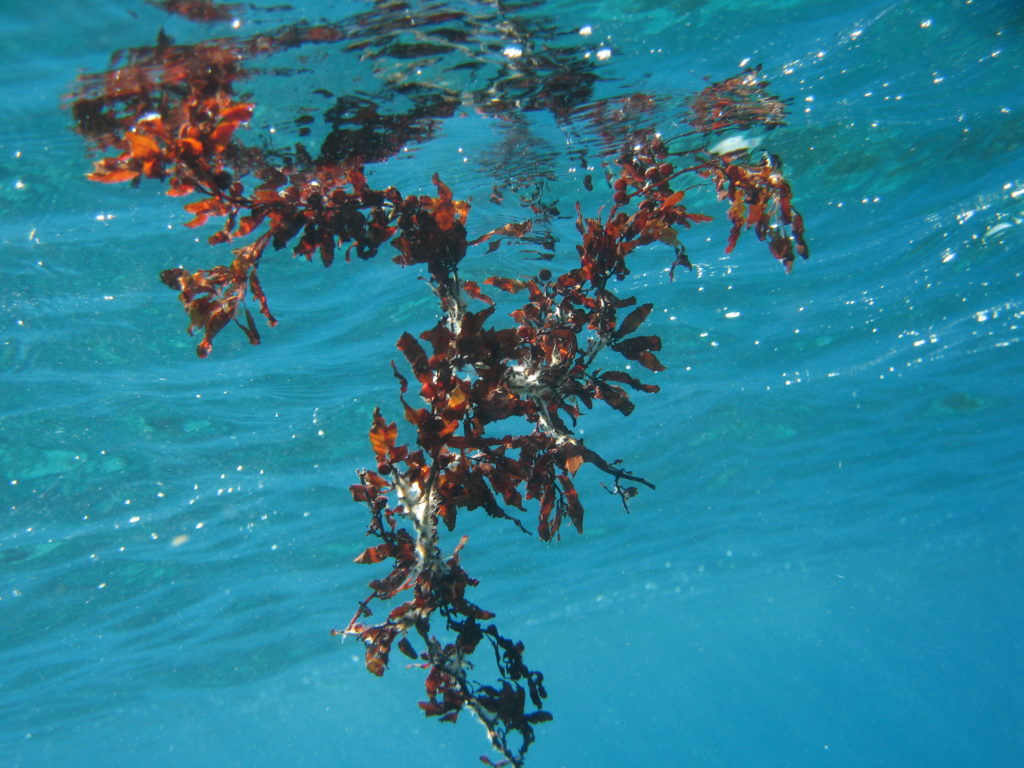
The project is a materials company that makes resins from carrageenan, a compound extracted from farmed tropical red seaweed. The resins are converted into single-use items such as straws and cups that are designed to compost at end of life. The company plans to scale its manufacturing in Guatemala through an existing local converting partner.
The SCF Technical Assistance Facility has financed two rounds of studies to answer these questions: a pre-feasibility study on seaweed supply, followed by a feasibility study comprising an environmental and social assessment and an intellectual property assessment. Technical assistance does not commit the SCF Fund to invest.
The Challenge
In 2019, Guatemala banned single-use plastic bags, straws, food containers and similar items, with exceptions for medical uses and factory-sealed products. Businesses were given two years to switch to compostable materials that meet the European standard UNE-EN 13432, subject to material availability. Plastic leakage is a regional concern.
The ban has created demand for compliant alternatives. Supply has now became the constraint. Carrageenan seaweeds are farmed almost entirely in Southeast Asia and East Africa. FAO data show global production of these seaweeds falling from about 12 million tonnes in 2018 to about 9 million tonnes in 2021, with a slight recovery since. Industry estimates of actual volumes are considerably lower than official figures. A manufacturer scaling up in Guatemala therefore depends on a distant and volatile supply chain. The manufacturer also has to show that its environmental claims and its standards of conduct hold up across a network of partner facilities and suppliers.
SCF’s Involvement – Technical Assistance
The SCF Technical Assistance Facility has financed three independent studies in two phases. Each phase answers a different question about whether the project can proceed.
Phase 1. Pre-feasibility study: can the seaweed supply chain support scale-up? (completed)
The study addressed these questions:
- How resilient the current sourcing of seaweed inputs is, and where it would break.
- Whether a Central American seaweed supply could replace imports, and in which countries.
- Which native and introduced species could be farmed in the region.
- How permitting, political, currency, security and weather risks compare across seven countries.
- What it would take to build a regional supply chain.
What it found:
- Almost no carrageenan seaweed is farmed commercially in Central America. Only Belize and Panama report any production, each under 10 tonnes (wet weight) a year.
- None of the seven countries has a regulatory framework specific to seaweed farming. Belize is the only one with recognised pilot projects.
- Native species are available, including Gracilaria spp. and Eucheumatopsis isiformis, an iota-carrageenan producer. The most widely farmed species, Kappaphycus alvarezii, is not native and has become invasive in other regions.
- The binding constraints are the lack of domestic demand, the lack of farming expertise, reliance on a narrow set of species, and immature permitting.
Phase 2a. Feasibility study: environmental and social study and action plan (completed)
- No fatal flaws were identified. The main risks concern how mature the management systems are, not the processes themselves. The study produced an Environmental and Social Action Plan to address them.
- The manufacturing sites carry limited, site-specific risks. In Guatemala, these centre on community health and safety in an urban setting, including traffic, nuisance, emergency preparedness and an accessible grievance channel.
- The upstream seaweed supply chain is where the significant safeguards apply: labour conditions across dispersed smallholder suppliers, biodiversity in coastal sourcing areas, and screening for Indigenous Peoples.
- The company’s carbon footprint method has a sound foundation under ISO 14067. Before the results can be independently verified, the method needs fuller documentation and explicit alignment with the relevant Product Category Rules.
Phase 2b. Feasibility study: intellectual property assessment (completed)
- Patenting of bio-based plastic alternatives has grown steadily since the early 1990s and sharply since 2015.
- In existing patents, carrageenan- and chitosan-based materials appear mainly in edible films and capsules, rarely in rigid articles such as cups and straws.
Our Target Impact
The primary goal of this project is to reduce greenhouse gas emissions, generate decent jobs and empower women.
-
SDG 13 Climate Action
- Carbon Emissions: By replacing fossil fuel-derived plastics, the project is expected to reduce carbon emissions. A life cycle analysis (LCA) based carbon footprint is in progress to estimate CO2 impact and avoidance.
- Climate Adaptation: Seaweed farming has the potential to enhance coastal resilience and support adaptation to climate risks.
-
SDG 8 Decent Work and Economic Growth
- Job Creation: Guatemala has a high rate of informal labor (71%), and 55% of the population lives in poverty. The project is expected to create jobs in seaweed farming industry and support the local economy.
-

SDG 5 Gender Equality
- Women’s Leadership and gender equality: The project is co-led by women and follows SCF’s gender policy, aligned with 2X criteria. Current plans include a workforce with at least 25% women, initiatives to involve women in the seaweed supply chain, and a gender equity program focused on equal pay and leadership development.
There can be no guarantee that the investment will be completed on the terms described or implied above, that SCF will be able to successfully invest in such project or that impact targets will be achieved.