- Sector : Sustainable Agriculture
- Location : Brazil
- Involvement : Technical Assistance
Overview
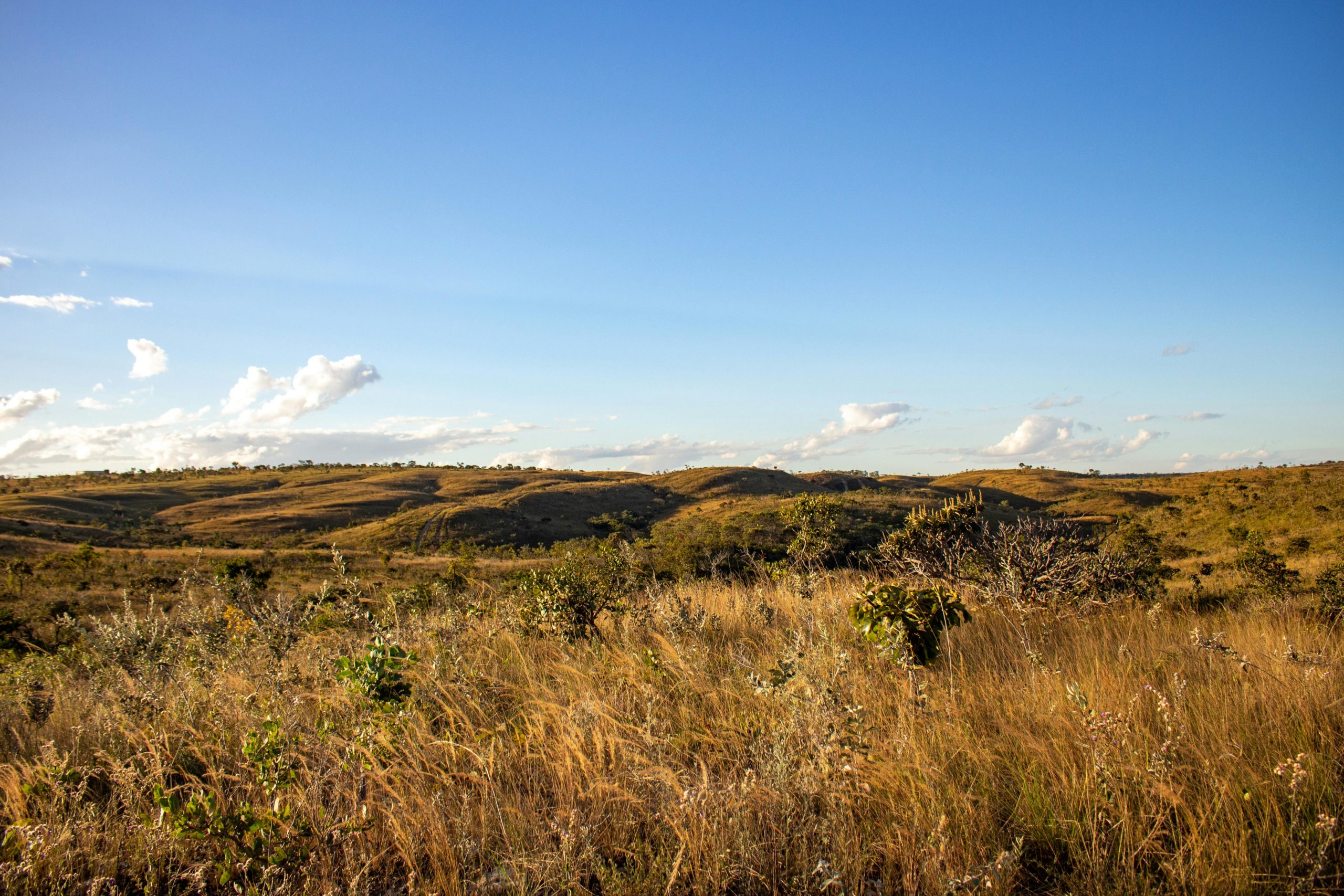
The Subnational Climate Fund (SCF) is providing technical assistance to a land restoration project in Cerrado, Brazil. The project aims to restore 10,000 ha of degraded pastureland across three target regions by supporting farmers to adopt regenerative pasture management, agroforestry, and integrated crop–livestock–forestry (ICLF) systems. By shifting production away from intensive practices, the project seeks to deliver climate mitigation, biodiversity restoration, and improved farm productivity, while reducing pressure for further land clearing in one of the world’s most threatened savanna ecosystems.
As the most influential country in South America, Brazil has committed to recovering 12 million ha of degraded pasture lands and restoring 12 million ha of native vegetation by 2030 under its Nationally Determined Contribution (NDC). The Native Vegetation Protection Law (2012) also provides the regulatory framework for restoration, combining legal requirements with economic incentives for mandatory and voluntary reforestation initiatives.
The Challenge
The Cerrado biome is the world’s most biodiverse savanna ecosystem and a globally significant environmental asset, and plays a critical role in Brazil’s hydrological cycle: native vegetation supports rainfall patterns through evapotranspiration.
Today, the Cerrado biome faces critical environmental and socioeconomic pressures that threaten its ecological integrity and the livelihoods of farming communities. Historically, the primary driver of land conversion has been extensive cattle ranching, which converted vast areas of savanna to pastureland. Inadequate land management and overgrazing have led to land degradation, with 68% of pastureland in the Cerrado currently degraded. Despite the availability of extensive degraded pastureland, land clearing for cattle ranching continues. In January 2024, Brazilian government data showed Cerrado deforestation increased by 43% year-on-year, even as Amazon deforestation fell by 50%.
The biodiversity crisis is equally severe. The Cerrado harbors approximately 30% of Brazil’s biodiversity and 5% of global biodiversity, yet agricultural expansion has eliminated roughly half of its native vegetation. This loss threatens 837 bird species, 120 reptiles, 150 amphibians, 1,200 fish species, an estimated 90,000 insect species, and 199 mammal species—many endemic to the region. Deforestation disrupts critical evapotranspiration-driven rainfall cycles, increasing drought frequency and severity, while degrading water flows essential to downstream agricultural systems and communities.
SCF’s Involvement – Technical Assistance
SCF is providing technical assistance to the project through two key studies to strengthen the Project’s investment case and reduce feasibility risks:
Tree Crop Technical and Market Assessment: This pre-feasibility study validates critical assumptions for priority species – such as Baru or Macaúba, across four areas:
- Seed and seedling supply viability—assessing availability, sourcing models, costs, and deployment constraints;
- Financial model refinement—testing yield expectations, establishment costs, and maintenance requirements
- Sensitivity analysis—identifying key uncertainties affecting unit economics
- Market validation—reviewing demand, pricing dynamics, and confirming financial model assumptions against current market data.
Environmental and Social (ES) Study via Impact MRV Framework: This study develops a digital monitoring, reporting, and verification (dMRV) framework, including database architecture, key performance indicators for ES risks and benefits, stakeholders mapping, data collection methodologies, MRV requirement reviews, and initial land title (CAR) analysis with geo-analytics of farm properties.
These studies aim to reduce uncertainty, enhance project bankability, and align implementation with national priorities for sustainable land use, climate resilience, and value-chain development—providing confidence to investors, donors, and subnational governments for informed decision-making and capital allocation. Outcomes from the pre-feasibility and environmental studies will guide SCF’s assessment of potential funding and inform design parameters for future investment instruments under the Fund’s blended finance model.
Our Target Impact
-
SDG 13 Climate Action
The project aims to restore degraded land and establish agroforestry systems that sequester carbon in soils and biomass. Preliminary estimates suggest the project could sequester up to 3 million tCO2e over its lifetime. Additionally, the project is designed to enhance climate resilience by regenerating soil health, preventing runoff and erosion, and creating heat-reducing microclimates that buffer against temperature extremes and climate variability.
-
SDG 8 Decent Work and Economic Growth
The project is expected to generate employment opportunities across multiple categories, including seasonal jobs for planting and harvesting activities, as well as full-time positions related to farm management, crop processing, and marketing. Detailed estimates of permanent job creation will be developed during the technical assessment phase and informed by the project’s scaling trajectory and operational requirements.
-

SDG 5 Gender Equality
The project is committed to promoting women’s economic empowerment by creating formal work opportunities for local women, including both seasonal and permanent positions across planting, harvesting, processing, and management activities. Targeted outreach initiatives will be implemented to identify and engage women and youth interested in participating in project operations. All employment practices and project design will align with SCF’s Gender Policy to ensure equitable access to opportunities and benefits.