- Sector : Sustainable Energy / Rural Mobility
- Location : Mozambique
- Involvement : Technical Assistance
Overview
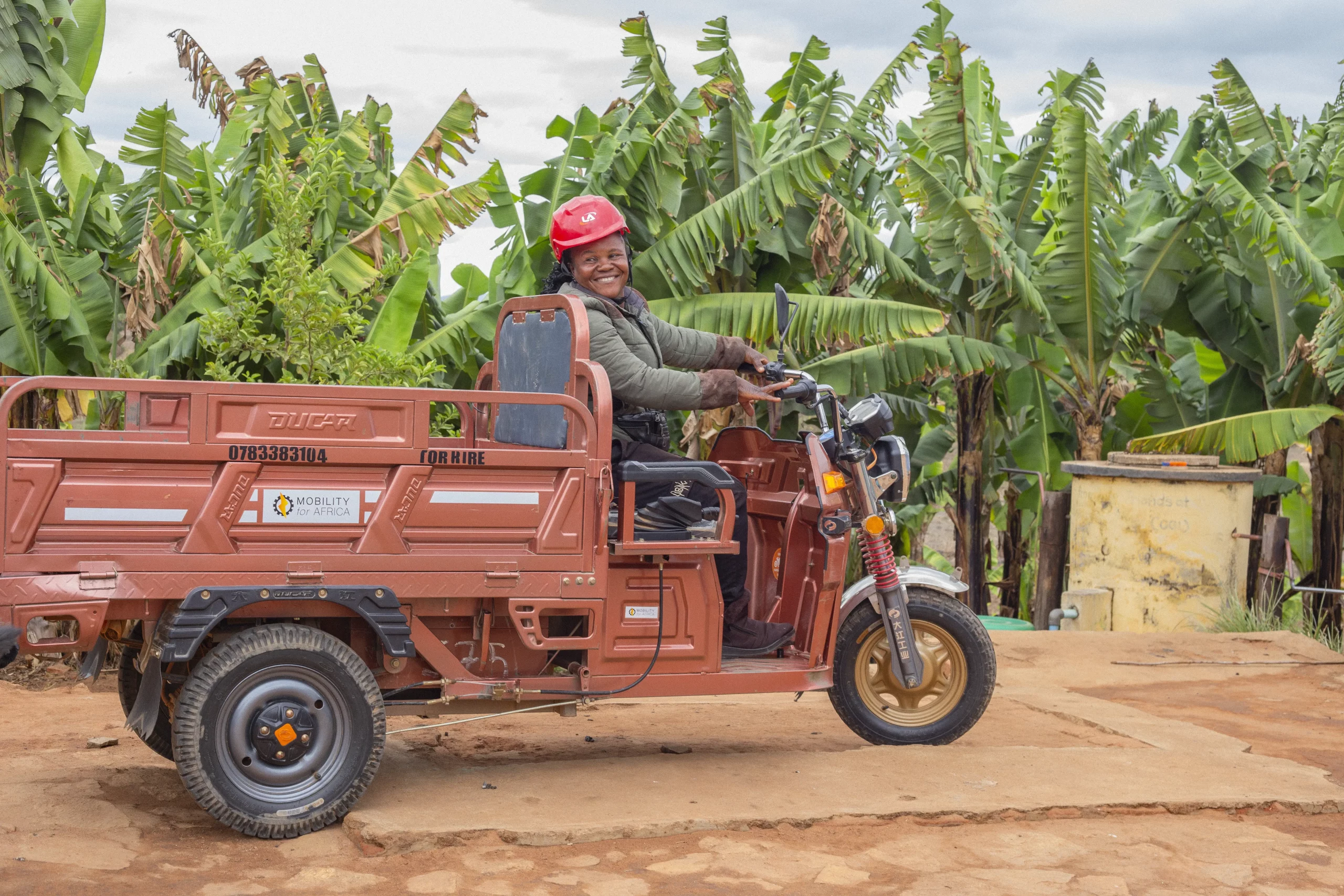
Established since 2018, Mobility for Africa is a operating in Zimbabwe and aims to transform mobility in rural African communities through the deployment of efficient, cost-effective, climate friendly electric mobility solutions.
This project deploys distributed electric mobility systems tailored to rural conditions, combining three-wheeled electric vehicles, solar mini-grid charging infrastructure, and battery swapping stations. The model is designed to address first- and last-mile connectivity gaps, enabling smallholder farmers and rural communities to access markets, services, and economic opportunities more efficiently.
Building on successful pilots in Zimbabwe, where 310 electric vehicles were deployed across multiple sites by the end of 2025, the project demonstrates a scalable and adaptable approach to clean mobility in underserved regions.
The Challenge
Rural communities in Mozambique face persistent transport constraints, including high costs, limited reliability, and dependence on fossil fuel-based mobility. These barriers restrict access to markets, reduce agricultural productivity, and contribute to post-harvest losses.
At the same time, conventional transport systems expose users to volatile fuel prices and high operating costs, while limiting participation of women due to physical, financial, and cultural constraints. The absence of integrated, affordable, and climate-compatible mobility solutions continues to constrain both economic development and climate progress at the local level.
SCF’s Involvement
The Subnational Climate Fund has recently approved targeted technical assistance to strengthen the project’s investment readiness and support its expansion into Mozambique’s smallholder agriculture sector.
The implementation of the electric mobility solution, combined with a robust socio-economic impact framework, will provide actionable data for informed investment decision-making, optimize asset deployment, and support sustainable development in rural Mozambique.
Baseline Assessment and Socio-Economic Impact Framework for Shared Transport and Battery-as-a-Service Models in Rural Mozambique
The Subnational Climate Fund (SCF) is designing and delivering a study that aims to establish a baseline and a forward-looking impact measurement framework with a primary focus on gender-inclusive livelihoods outcomes, while capturing socio-economic co-benefits of shared electric transport and battery-as-a-service models.
The study will will draw on lessons learned from Mobility For Africa’s experience in Zimbabwe and assess community-level transport systems, social acceptance, gender and livelihoods dynamics, and shared ownership arrangements, while laying the foundation for consistent tracking of change over time.
The project will focus on providing insights to:
- Transport access, mobility patterns, and current suage of shared and informal transport;
- Livelihoods, economic activities and income-generating opportunities linked to improved mobility;
- Gender participation, women mobility constraints and inclusion dynamics;
- Feasible options for shared asset ownership and community governance;
By integrating shared electric transport, SCF aims to catalyze economic growth and empower local communities, while simultaneously addressing pressing environmental challenges.
Commercial Viability for shared electric mobility and battery-as-a-service offering across selected geographies in rural Mozambique
The Subnational Climate Fund (SCF) is supporting Mobility for Africa in an initial commercial assessment of demand, affordability, willingness-to-pay, and indicative revenue potential for shared electric mobility services in selected rural agricultural communities in Mozambique.
The proposed intervention seeks to improve rural mobility, transport efficiency, and access to productive economic activities through shared electric transport solutions tailored to agricultural and rural livelihoods context.
Our Target Impact
The following SDGs could be positively impacted by the establishment of a green lender in the region:
-
SDG 13 Climate Action
The transition from diesel-based transport to electric mobility powered by solar energy significantly reduces greenhouse gas emissions and lowers emissions intensity across rural transport systems.
-
SDG 8 Decent Work and Economic Growth
Improved mobility reduces transport costs, increases reliability, and enhances market access. This leads to lower post-harvest losses and enables new income-generating activities, including transport services, trade, and local processing.
-
SDG 5 Gender Equality
The project explicitly targets women as primary users through group-based ownership models and tailored vehicle design. This approach helps remove structural barriers, increasing women’s participation in transport services and higher-value agricultural activities.
The project described above is only receiving Technical Assistance from SCF at the time of writing. There can be no guaranty that any investments will be completed or that impact targets will be achieved.