
- Sector : Urban Development Solutions
- Location : South Africa
- Involvement : Technical Assistance
Overview
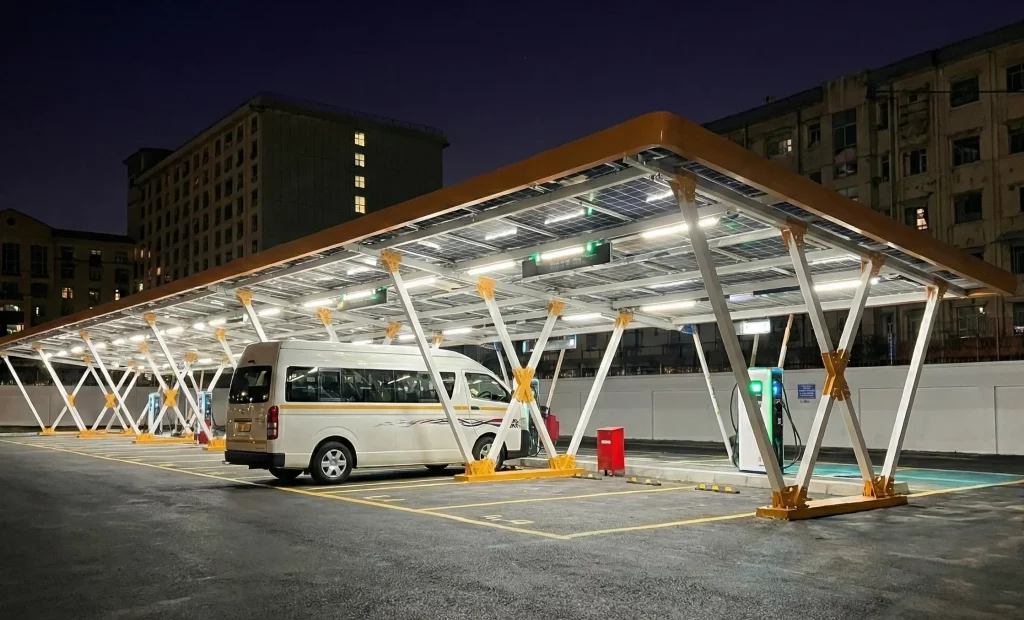
FlxEV is developing an integrated electric mobility solution for South Africa’s minibus taxi sector, combining electric vehicles, charging infrastructure, and renewable energy procurement strategies to support a scalable transition toward low-carbon transport. Supported by the SCF Technical Assistance Facility, the project seeks to address critical barriers to deployment while building a commercially viable model capable of attracting future investment.
The first pilot deployment is at the Century City public transport interchange (PTI) in Cape Town. The pilot was launched on 1 October 2026 with the signing of a memorandum of understanding (MOU) and a ceremonial flag-off of the first electric minibus taxis at the interchange.
The Challenge
South Africa’s minibus taxi industry provides essential mobility services to millions of passengers every day. However, the sector remains heavily reliant on diesel-powered vehicles, resulting in significant greenhouse gas emissions, air pollution, fuel expenditure, and exposure to energy price volatility. At the same time, large-scale electrification faces several challenges:
-
- Limited charging infrastructure.
- Concerns regarding energy reliability.
- Uncertainty around renewable energy sourcing.
- Financing constraints for operators.
- Regulatory approval requirements.
- Limited evidence regarding operator adoption and market readiness.
Addressing these barriers is essential to unlock the environmental, economic, and social benefits of electric mobility.
Technical Assistance
Pre-Feasibility Study
Our Target Impact
-

SDG 5 Gender Equality
The company promotes gender equity by empowering women to participate in the MBT sector and ensuring safer commuting for women and children
-

SDG 8 Decent Work and Economic Growth
Operational savings of 40-70% from e-MBTs enhance the profitability of the MBT sector, addressing high fuel costs that currently inflate fares
-
SDG 11 Sustainable Cities and Communities
The company aims to create a zero-emission urban transport system by building charging facilities in key cities and collaborating with local stakeholders for effective EV integration
-
SDG 13 Climate Action
A single internal combustion engine (ICE) MBT emits approximately 54.2 kg of CO2 daily. With 250,000 MBTs nationwide, this totals 13.5 million kg of CO2 emissions per day. e-MBTs, as such, produce zero tailpipe emissions