- Sector : Urban Development Solutions
- Location : Kenya
Overview
Kenya has lost roughly 70% of its wildlife since the 1970s. The immediate cause is not poaching but space: rangeland that once carried seasonal wildlife movement has been fenced, grazed and converted, and the ratio of livestock to wildlife rose from around 3:1 in the 1970s to about 8:1 by 2013. Community conservancies have become the main mechanism holding the remaining corridors open, and they survive on income that is rarely secure.
This project proposes a small, low-density eco-lodge on community-owned land inside a conservancy, alongside a separately governed programme of rangeland restoration, corridor maintenance and monitoring. The commercial logic is that tourism revenue, rather than successive grant cycles, funds the conservation work and pays the community for keeping the corridor open. The Subnational Climate Fund (SCF) approved technical assistance in May 2026 to strengthen the project’s stakeholder engagement and consent process. That assignment is now complete. The project remains at pre-feasibility and no investment decision has been taken.
The Challenge
Corridors in this landscape overlap community land, which is what makes them fragile. Elephants damage crops and compete for water, livestock is lost to predators, and the households carrying those costs see little of the value the wildlife generates. Poaching, illegal grazing and uncontrolled fencing compound the pressure, and several corridors are now partly degraded or at risk of closing altogether. Once a corridor closes, the genetic exchange and seasonal movement it carried do not resume.
Where livestock and smallholder agriculture are the only livelihoods available, pressure on land rises during drought and conservation objectives collide directly with household survival. Degraded rangeland then holds less carbon, retains less water and recovers more slowly, feeding the same cycle. Conservancies have shown they can hold this line, but the funding that sustains them is largely philanthropic and renews on donor timetables rather than on the timescale land management actually requires.
Technical Assistance
The SCF Technical Assistance Facility, led by the International Union for Conservation of Nature (IUCN) in collaboration with Catalytic Finance Foundation and Gold Standard, funded a stakeholder engagement review, consultation programme and planning assignment, delivered by an independent consortium between July and September 2026.
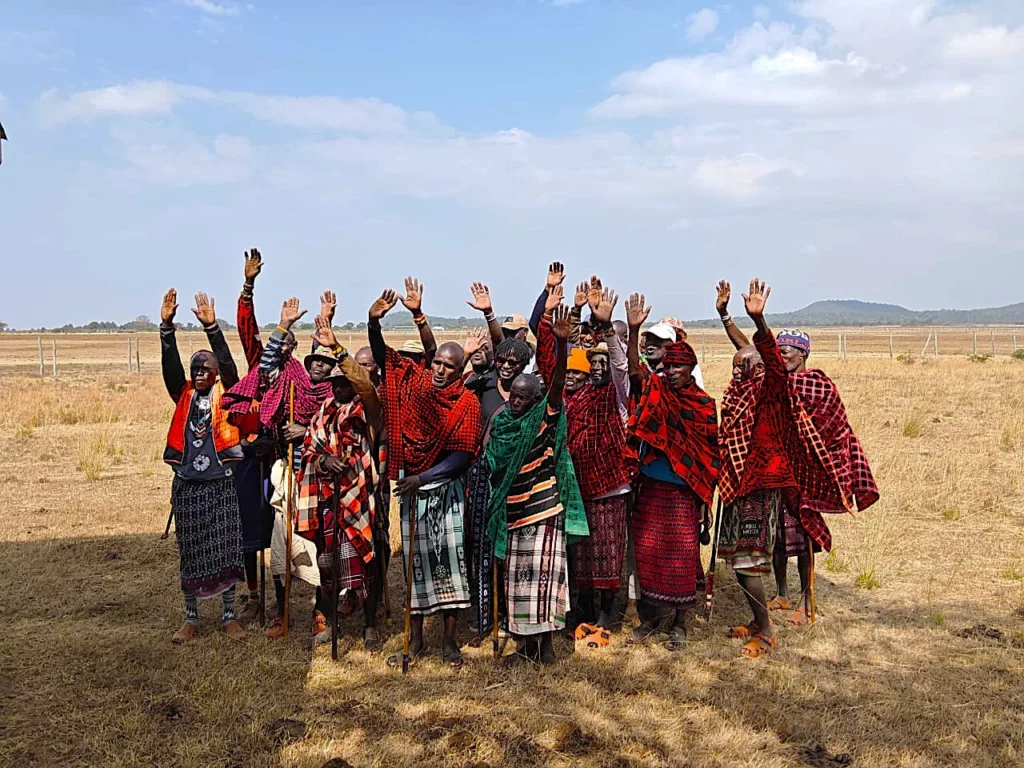
The site is community-owned land, and the project cannot proceed to a lease, or to institutional capital, until the consent process is documented to a standard an investor’s own diligence will accept. The assignment reviewed existing engagement records and lease materials against IFC Performance Standards, Gold Standard requirements and the principle of Free, Prior and Informed Consent, ran targeted consultations with women, youth and elders, and observed the community’s own decision-making process.
What it found
- The project is broadly understood by community stakeholders, and the conservancy has an established, legally constituted and functioning governance structure.
- The community land management committee is representative and provides space for open discussion, and community views have been incorporated through extensive consultation.
- Landowners expressed strong enthusiasm and clear expectations of improved livelihoods, which will need managing against realistic timelines and commitments.
- Parts of the landscape are dry and visibly degraded and wildlife presence is currently limited in places, so active grazing, habitat and wildlife management will be needed to support recovery.
- In August 2026 a community assembly confirmed quorum, supported the project proceeding, and mandated the land management committee to negotiate final lease terms.
What remains before lease signature
The assignment produced a Stakeholder Engagement Plan covering engagement, consent, benefit-sharing, grievance handling and monitoring, together with draft resolutions, a legal review and a consent sequencing plan.
It also set out what has to happen next:
- Finalise and disclose the environmental and social assessment materials to the community.
- Record how concerns raised were answered, and which project or lease terms changed as a result.
- Formally adopt and operationalise the grievance mechanism, with published contacts and tested channels.
- Finalise the consent resolution and lease terms with explicit benefit-sharing conditions.
None of this replaces the full environmental and social impact assessment, including a biodiversity baseline, required before any investment.
Our Target Impact
-
SDG 13 Climate Action
Rangeland restoration, controlled grazing and replanting of indigenous species are intended to rebuild vegetation cover and soil carbon, and to avoid further emissions from land degradation. Lodge operations are designed to run on solar rather than diesel.
The climate mitigation potential has not been quantified. The appraisal records this as requiring a dedicated assessment.
-
SDG 8 Decent Work and Economic Growth
The project targets more than 100 positions over five years, mostly in lodge operations across hospitality, food and beverage and logistics, with further conservation roles funded as tourism revenue grows.
Kenya’s informal employment rate runs at roughly 80 to 85%, so formal, wage-paying roles in a remote rural landscape are the material change here.
-
SDG 5 Gender Equality
Kenya scored 0.72 on the gender gap index in 2023, indicating women are substantially less likely than men to have equal economic participation and opportunity.
Female representation in the initial staffing projection is 10%. A Gender Inclusion and Diversity Plan is in development and will set time-bound participation targets. Consultations under the technical assistance were designed to reach women, youth and elders separately rather than through general meetings alone.
There can be no guarantee that the investment will be completed on the terms described or implied above, that SCF will be able to successfully invest in such project or that impact targets will be achieved.