SCF-Turning olive mill waste into biochar: lessons from a pre-feasibility study in Tunisia
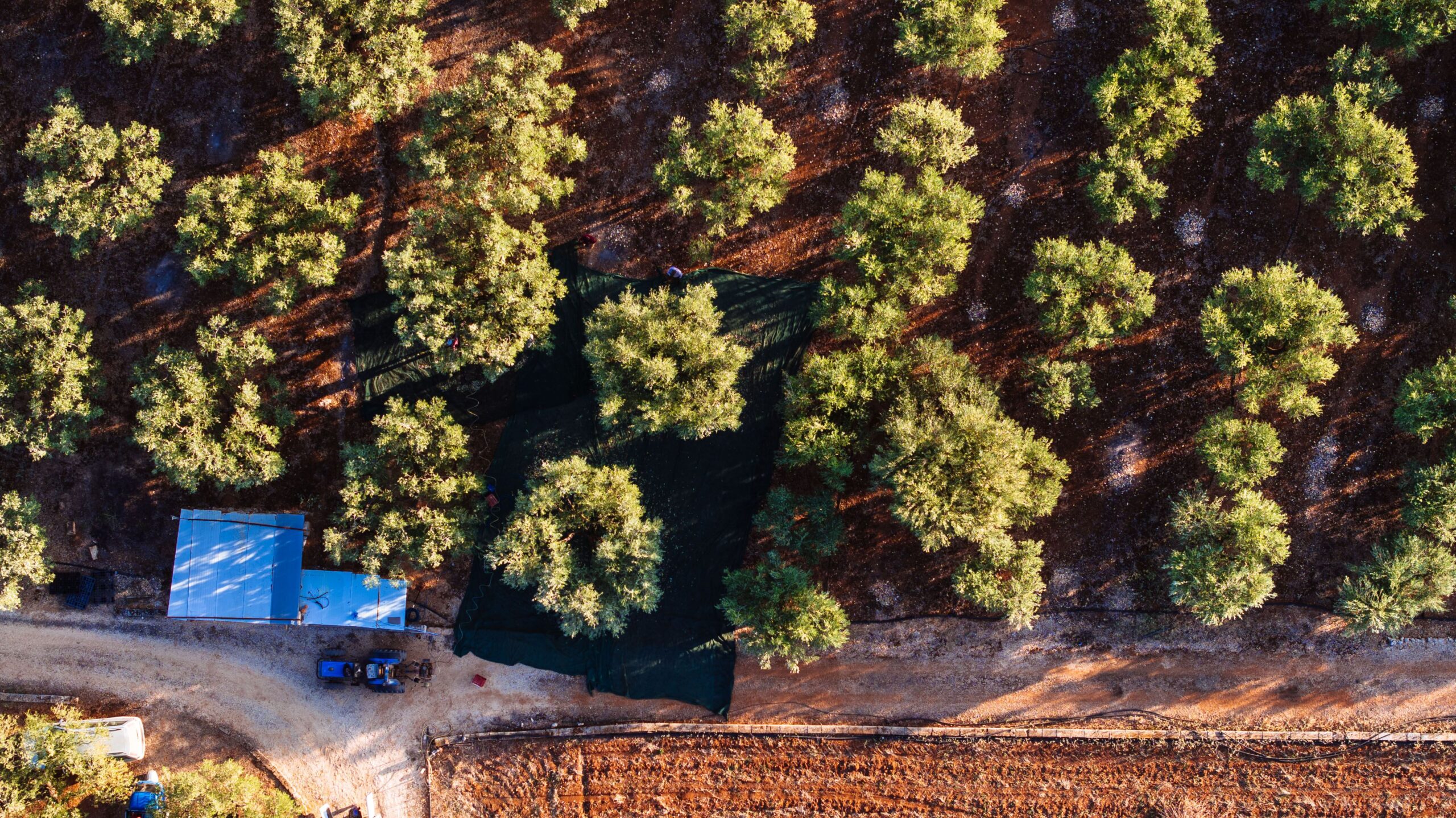
Image credits: Regenerative SARL
A pre-feasibility study supported by the Subnational Climate Fund (SCF) Technical Assistance facility tested whether olive mill wastewater sludge, one of Tunisia’s most persistent agricultural residues, could be turned into a stable biochar that can be used to improve soils and store carbon.
About the project
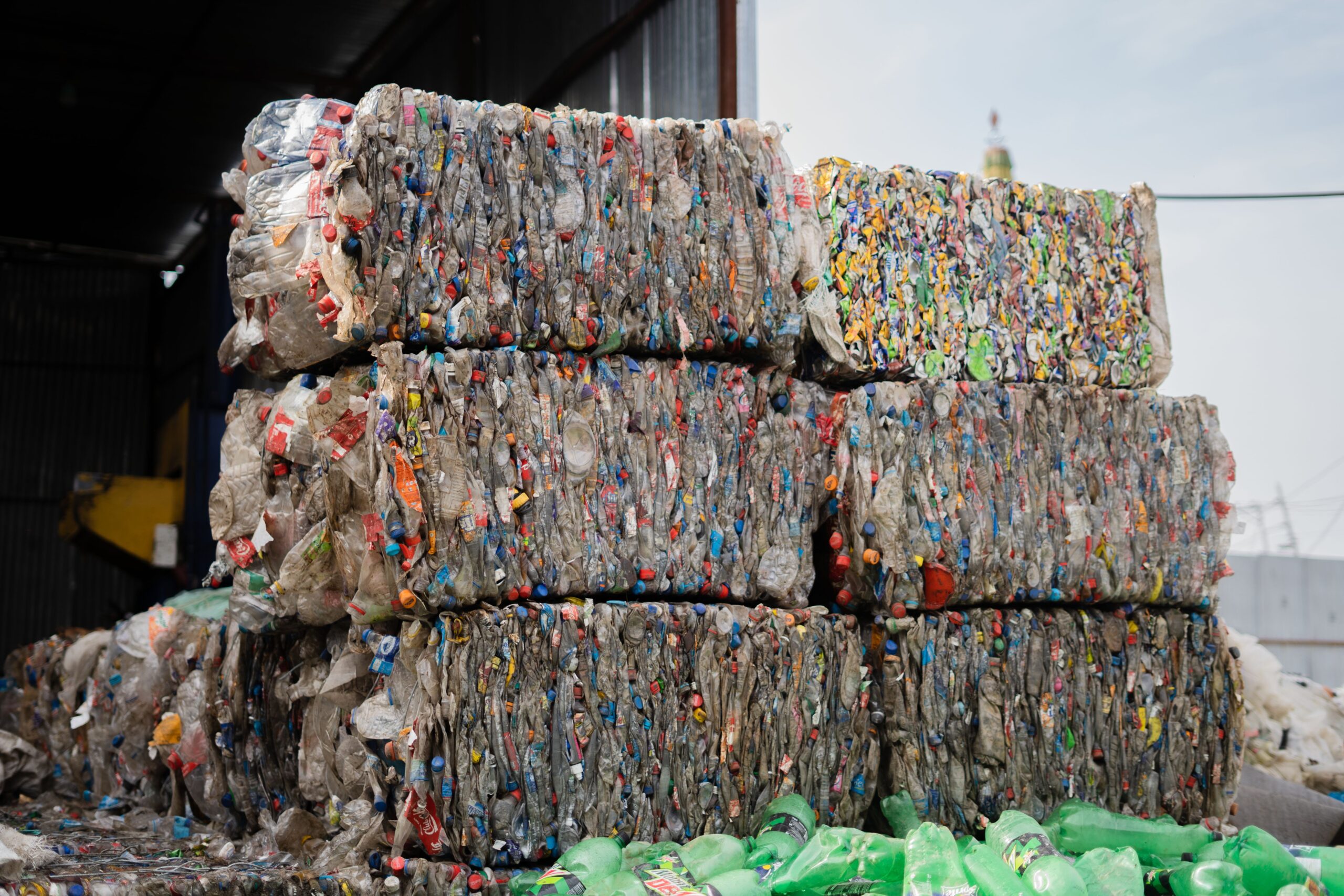
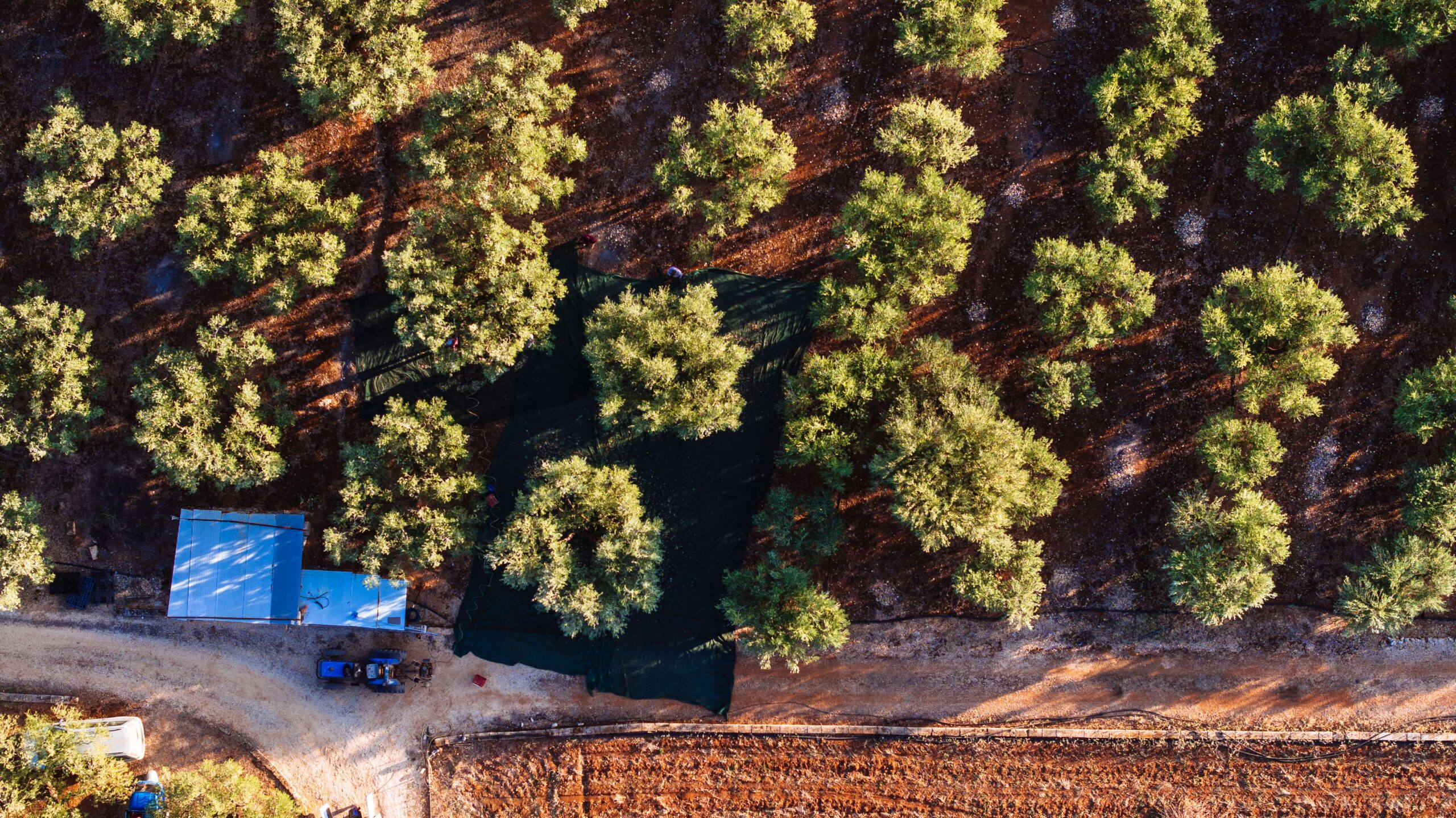
Tunisia is one of the world’s largest olive oil producers. Each harvest also generates large volumes of olive mill wastewater (OMW), known locally as margine. This dark liquid, left over when olives are pressed for oil, consists of the fruit’s own water, the water used in processing and dissolved organic matter. Due to the lack of cost-effective ways to dispose it the most common method is open-air evaporation basins, where it accumulates over the years as a sludge that has no market value. Its high content of phenolic compounds, acidic pH, and unpleasant odor produce negative consequences for the soil, surface and groundwater, making it a threat to the surrounding populations and the environment.
Regenerative SARL, a Tunisian company, is developing an integrated facility that turns this residue into agricultural inputs for farmers. The model combines three processes: pyrolysis to produce biochar, composting to stabilise organic matter, and anaerobic digestion to produce biogas, which is expected to cover part of the site’s energy needs. Liquid biostimulants produced with spirulina are also part of the concept. The resulting soil amendments are designed as an affordable alternative to synthetic fertilisers, which by contrast are costly for farmers, and whose production and overuse contribute to greenhouse gas emissions, soil degradation and water pollution.
About the study[1]
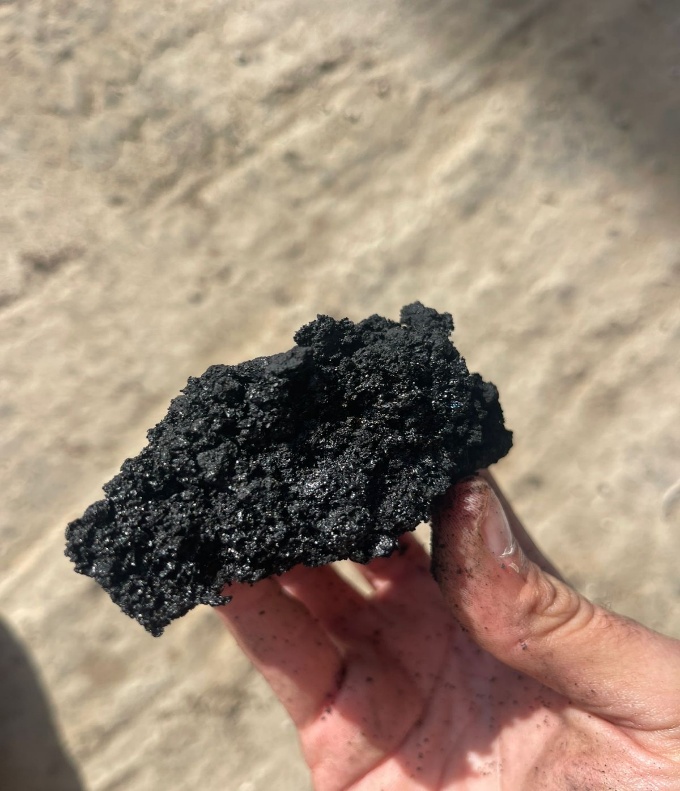
The study supported by SCF focused on repurposing margine to produce biochar, a charcoal-like material made through pyrolysis. Pyrolysis is a method of recovering energy and value from waste through thermochemical conversion, where organic matter is broken down at high temperatures (between 200 and 800 °C) in an atmosphere with little or no oxygen[2]. Unlike most charcoal, which is linked to large-scale deforestation, biochar is made from waste (in this case, margine). Added to soil, it can improve structure, fertility and water retention, supporting microbial activity and fostering plant growth. Its carbon is also highly stable, because it is bound in aromatic ring structures and condensed carbon chains that resist decomposition. As a result, it can stay locked in soils for hundreds to thousands of years, making biochar a recognised method of carbon removal.
Whether biochar made from margine could deliver these benefits, however, had yet to be tested. The study set out to answer three questions: Can margine be turned into good-quality biochar? Can that product be legally sold and used on Tunisian farms? And does the process store more carbon than it emits?
The pre-feasibility study, completed in June 2026, also aimed to identify what must be in place for the project to move to full feasibility. To do so, the study team collected 1,800 kg of margine sludge, ran pyrolysis trials in two pilot units, analysed the biochar in the laboratory, mapped the regulatory requirements and estimated the carbon balance through a life cycle assessment (LCA).
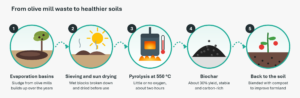
In any pyrolysis process, the main factors that determine the quality and quantity of biochar produced are temperature, residence time in the reactor, heating rate, pressure, particle size and moisture content, and the use of catalysts. Pre-treatment of the input is therefore essential. Ideally, the input should be dried to below 15% moisture and ground to a particle size of less than 20 mm, so that heat is distributed evenly in the reactor. This proved challenging for margine: in the pilot, the sludge arrived in compact, wet blocks that had to be sieved and sun-dried beforehand. For this reason, the full-scale design includes a dedicated dryer and grinder.
Regarding the results, the first batches produced a dry, crisp biochar. Laboratory analysis showed a moderate carbon, high nitrogen and very low hydrogen content, which indicates good carbonisation, aligned with international quality standards. The table below summarises the analytical requirements set by the European Biochar Certificate (EBC) for biochar intended for agricultural use.
| Parameter | EBC (Agro requirement) |
| Corg (plus Ctot, H, N, O, S, ash) | Declaration |
| H/Corg | < 0.7 |
| O/Corg | Should be < 0.4 (exemption possible) |
| Pb | 120 g/t DM* |
| Cd | 1.5 g/t DM |
| Cu | 100 g/t DM |
| Ni | 50 g/t DM |
| Hg | 1 g/t DM |
| Zn | 400 g/t DM |
| Cr | 90 g/t DM |
| As | 13 g/t DM |
| 16 EPA PAH | 6.0 ± 2.4 g/t DM |
| 8 EFSA PAH | 1.0 g/t DM |
| Benzo[e]pyrene, benzo[j]fluoranthene | < 1.0 g/t DM |
| PCB | 0.2 mg/kg DM (only if 8 EFSA PAH > 1.0 mg/kg) |
| PCDD/F | 20 ng/kg WHO-TEQ (only if 8 EFSA PAH > 1.0 mg/kg) |
Table 1. EBC analytical requirements for biochar for agricultural use (EBC-Agro).
*g/t DM = grams per tonne of dry matter
Lessons for the field
Beyond the project itself, the study offers practical insights for anyone working on biochar, agricultural residues and carbon removal in Tunisia and similar contexts.
1) Technical feasibility
The study demonstrated that producing biochar from margine is technically feasible. This means that, once dried and prepared, margine
can be processed into biochar of consistent quality, and that the pilot results are reliable enough to justify testing at a larger scale.
The biochar’s high nitrogen content and low surface area position it best as a soil amendment that helps regulate pH, retain nutrients and support soil fertility. This still needs to be confirmed through field trials. To be sold as a soil amendment in Tunisia, it must also comply with national standard NT 10.44, which sets limits for heavy metals, pathogens and inert materials such as plastics.
Input preparation also shapes the project’s economics. Drying and grinding are energy-intensive, and if these steps become too costly, they can weaken the project’s viability. In this case, the cost is expected to be reduced by reusing the gas produced during pyrolysis to dry the inputs.
2) Feedstock sourcing
Worldwide, pyrolysis has so far been little used in waste management, due to organisational, economic and technological reasons. However, projects of this type have an advantage, as they work with agricultural residues collected separately, which removes the need for a sorting centre to separate organic waste. The main challenge is to deliver a standardised product of consistent quality, backed by a reliable supply of inputs.
3) Regulatory framework and carbon certification
Tunisia has no biochar-specific law; biochar for agricultural use falls under existing rules for soil amendments and organic fertilisers, but consultations indicated that compliance with international requirements is considered more than sufficient for market approval. Biochar is a recognised carbon removal pathway, but certification standards set demanding conditions. One of them is stability: the biochar’s molar H/Corg ratio must stay below 0.7 for its carbon to count as durably stored (as presented in Table 1). According to the study’s preliminary assessment, a full year of operation producing 580 tonnes of biochar could deliver a net carbon removal of approximately 390 tonnes of CO2 equivalent (tCO2e). Securing credits is therefore possible but not straightforward and will need further assessment in the next phase.
What happens next
For Regenerative SARL, given the pre-feasibility study proved margine would constitute a good feedstock source for biochar production and that preliminary results were favourable in terms of regulation requirements, the study supports the transition to the next phase. Therefore, a grant for a feasibility study was recently approved by SCF. It will be structured around four parallel workstreams over six months: technology selection, market assessment and demand validation, agronomic trials on tomato crops, and a mock audit against the Puro.earth and WBC standards.
For similar projects elsewhere, the study offers a useful reference. It highlights several factors to address early, such as confirming early on the feedstock can produce consistent biochar, locating the facility close to the waste source, identifying the regulatory requirements, and assessing carbon claims against certification standards.
About the Subnational Climate Fund
The Subnational Climate Fund is a blended-finance initiative supporting mid-sized infrastructure projects and companies in emerging markets. Through its Investment Fund and Technical Assistance Facility, SCF strengthens project fundamentals, enhances investment readiness and mobilises private capital for sustainable development outcomes across sectors including sustainable energy, waste management and regenerative agriculture. By focusing on early-stage project preparation, SCF bridges ambitious climate and nature objectives with the requirements of institutional investors, development finance institutions and philanthropic capital providers.
-
- The study was conducted on behalf of Regenerative SARL. It was written by makesense (Sofyan Martin), Cristalchain (Côme Henri), IRD (Claude Hammecker), and Regenerative SARL (Karim Skik and Ahmed Zghal). ↑
-
- Information drawn from an earlier Global Study on Pyrolysis, supported by SCF and written by Anviga (2024). ↑
Discover our other articles